
1. Artwork gallery
Visitors to your website will likely spend the most time browsing through your artwork. Make sure to add a title and a short description, including material, medium, and dimensions.
- Organize your art in series or by year.
- Write the correct filenames for your images, including the artwork title.
If you use Instagram:
Keep the same size and proportions for your website (1350x1080 pixels). Matching sizes saves time when reformatting content. It works the same way with any other social media: repurpose the content you publish there for your website (Google doesn’t detect it as duplicate content, and this way you use the dopamine trap for posting on social media to update your website).
2. Artist biography and statement
Write about yourself in this section. You can also add an artist's resume, a list of exhibitions, publications, and any other highlights in your career.
- Separate clearly your personal story (biography) and the message you intend to convey with your art (statement).
- Add a portrait of yourself
- You can add private collections and online exhibitions to your exhibition list.
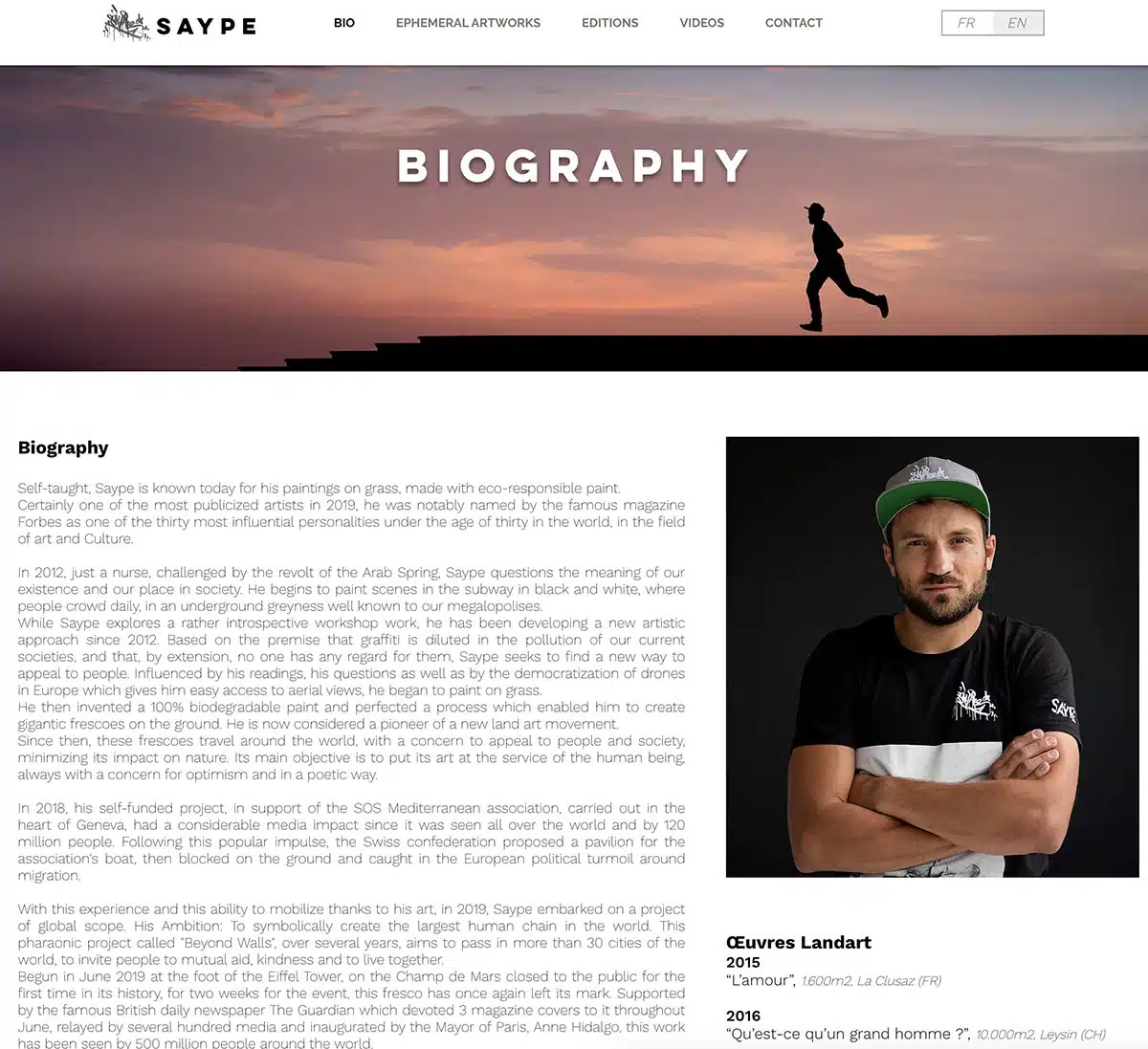
Below is a good example of SAYPE's Biography page with a separate statement and exhibition list. (This isn’t promotional, we don’t know the artist)
3. Contact page
Are you leaving your email and telephone number on the contact page? I recommend using a contact form instead. It protects you from spamming.
- Your social media can be there as well as on your footer.
- Your personal or better artist studio address. If you want to sell expensive art, the client will need to know it.
4. Newsletter registration
Emailing is the best way to convert your fans into potential buyers.
If your art costs more than a few hundred, don't just ask them to leave their emails. Ask for more information in the form. (how did they find you, what kind of art they are interested in, what price range they wish to buy, etc.)
Consider an alternative to Mailchimp for the newsletter. They halved their maximum contacts in their free version (500). We, for example, changed to Mailerlite.
5. Blog
This section will publish content about your life, upcoming events, and sales. You can also write about other artists who inspire you or have someone else write about you. You can rework and post your Instagram content there. If you have any, embed your YouTube videos in a blog post.
6. Social media links
Make sure you link all your professional social media on your home page. It helps people follow you and get to know you more. I frequently spot artists who leave some links unmodified.
7. Webstore
Occasionally, you can find a Webstore on an artist's website. However, some artists are concerned about appearing too commercial. Artists are indeed walking the fine line between "pushing too hard" and "not promoting enough". Your website is laser-targeting potential collectors with purchase intent. Your Webstore facilitates their purchase decision, establishes rapport, and makes sales.
8. Shipping page
If you have a webstore, you’ll need a shipping page. List shipping details here. Share the insurance company's name. Explain the return rules. Add pictures of your packaging process. Information about a certificate of authenticity should be included.
Provide clear shipping details. Name the insurance company, state your return rules, and add photos of how you package the work. Buyers feel more confident when they see how you handle deliveries.
9. Community
Add a members-only area or a discussion space where collectors can interact. Exclusive content or early access to new work builds loyalty and gives supporters a reason to return.
10. Press and media page
While your biography page might list exhibitions, a dedicated press page targets journalists, curators, and gallerists directly. It hosts downloadable high‑resolution images, a short bio, press releases, and links to published features. Without it, media professionals often move on.
Additional elements
- Testimonials or reviews from collectors/critics.
- FAQ page: addresses common questions about purchasing, commissions, shipping, returns, etc.
- Commission page: details for custom work, process, and pricing.
- Events/calendar: upcoming shows, exhibitions, art fairs.
- Privacy policy or terms of service (link it only from the footer).
- A separate and downloadable portfolio in PDF. Many collectors would like to have your catalog offline on their mobile or tablet.
Clean user experience
In conclusion, you will need to organise all those elements clearly so people do not get lost. The content and style should change whenever you are a digital artist, in contemporary art, or a street artist, but any website you have organized all these elements in a straightforward navigation. A visitor should find any section within two clicks. A clear structure keeps people on your site longer and helps them act.
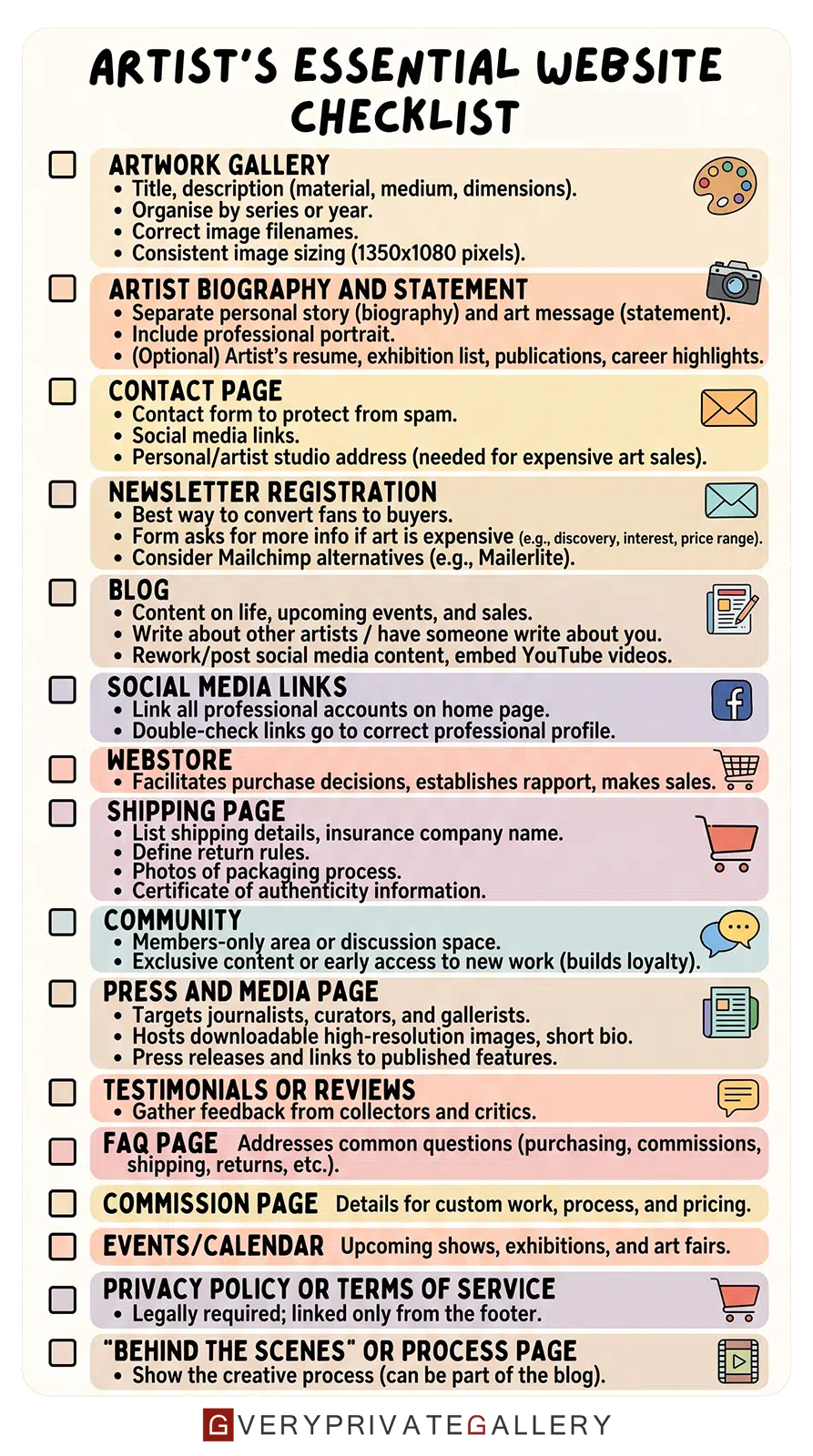
Content for artist websites: Checklist
For you to print it or keep it on your mobile :-)
Have you decided to make your website? You might be interested to read our in-depth article about SEO for artists.
Share "content for your art website" on:
Articles about SEO:
- Art keywords
- Artist websites backlinks
- Content for artist websites
- Art website name ideas
- SEO tips for artists