
Keywords are one of the main elements of SEO. Your keywords are the words or phrases in your web content that help people find your site via search engines. An artist's well-optimized website should contain keywords people search for, especially in the titles.
Of all that search traffic, 91% goes to sites listed on the first page of search results. This is your goal - your pages being at least on the 1st page of Search Engines.
Questions to ask yourself
- What is your art about?
- What makes your art special?
- How would your audience define it?
- What would they write when searching for your art?
- What makes your art stand out?
"If your art would disappear today from the Web...
What would your audience miss,
that they wouldn't find on any other artist websites?
Art keywords list
- Think outside the "art box." Talking just about art is less and less relevant these days.
- Do some research. See what others on the Web are writing about it.
- Be specific. Avoid very generic keywords such as "contemporary art."
1. Know your audience
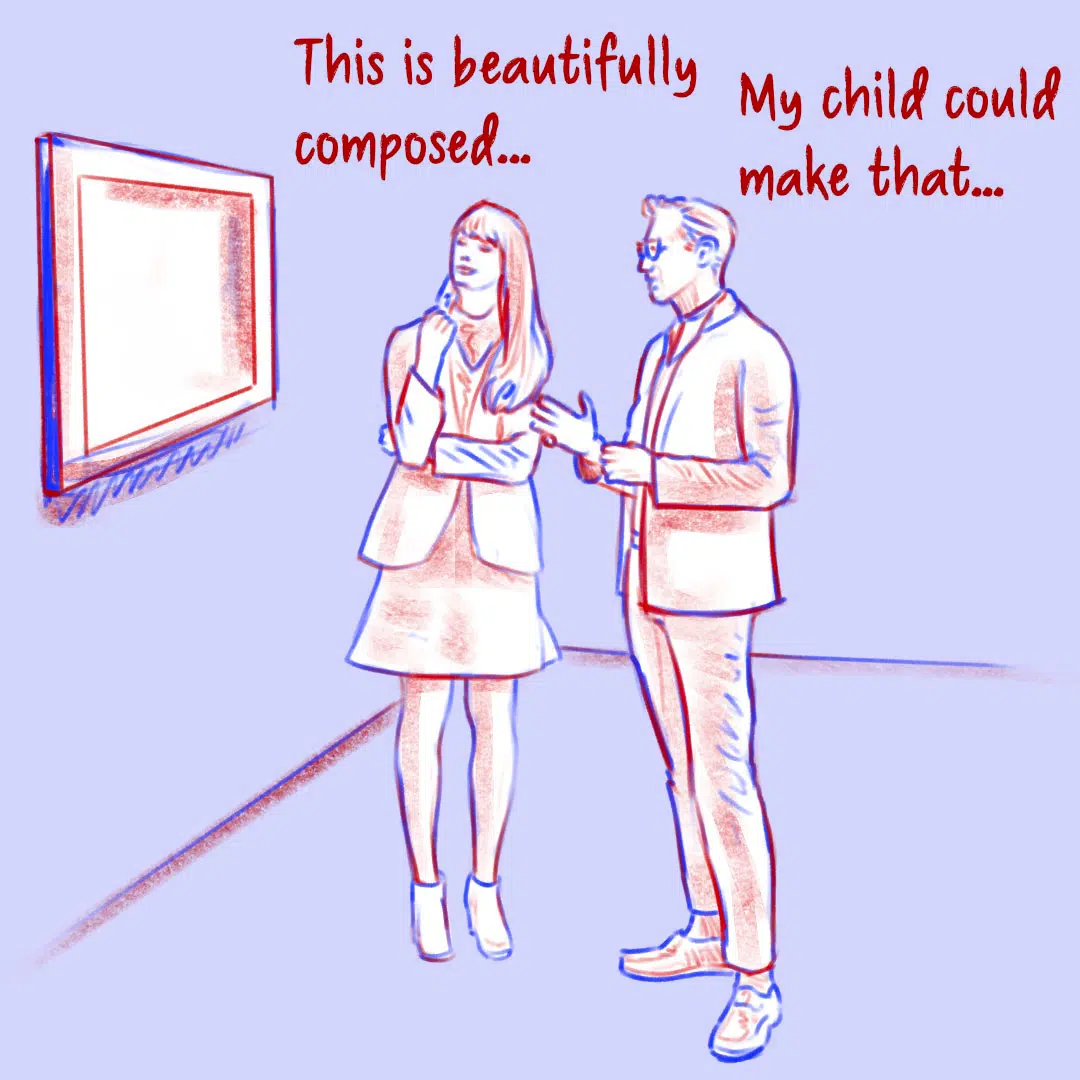
How people use vocabulary depends on their social class, education, workplace, and residence. All these factors influence their opinions, values, and interests.
How you want to sell your art online determines how you speak about it. Getting into the art galleries won't be the same as selling art prints on Etsy. You need to know the wording your audience uses.
2. Build your semantics
Building semantics is building more meaning into the words you use in your content. You need to compile the meanings you want to appear in Search Engines. For example, I'm an artist, and my paintings are contrasted. I want to describe my art using words similar to "contrasted paintings." Moz Keyword Explorer is a great tool for this.
It gives me that:
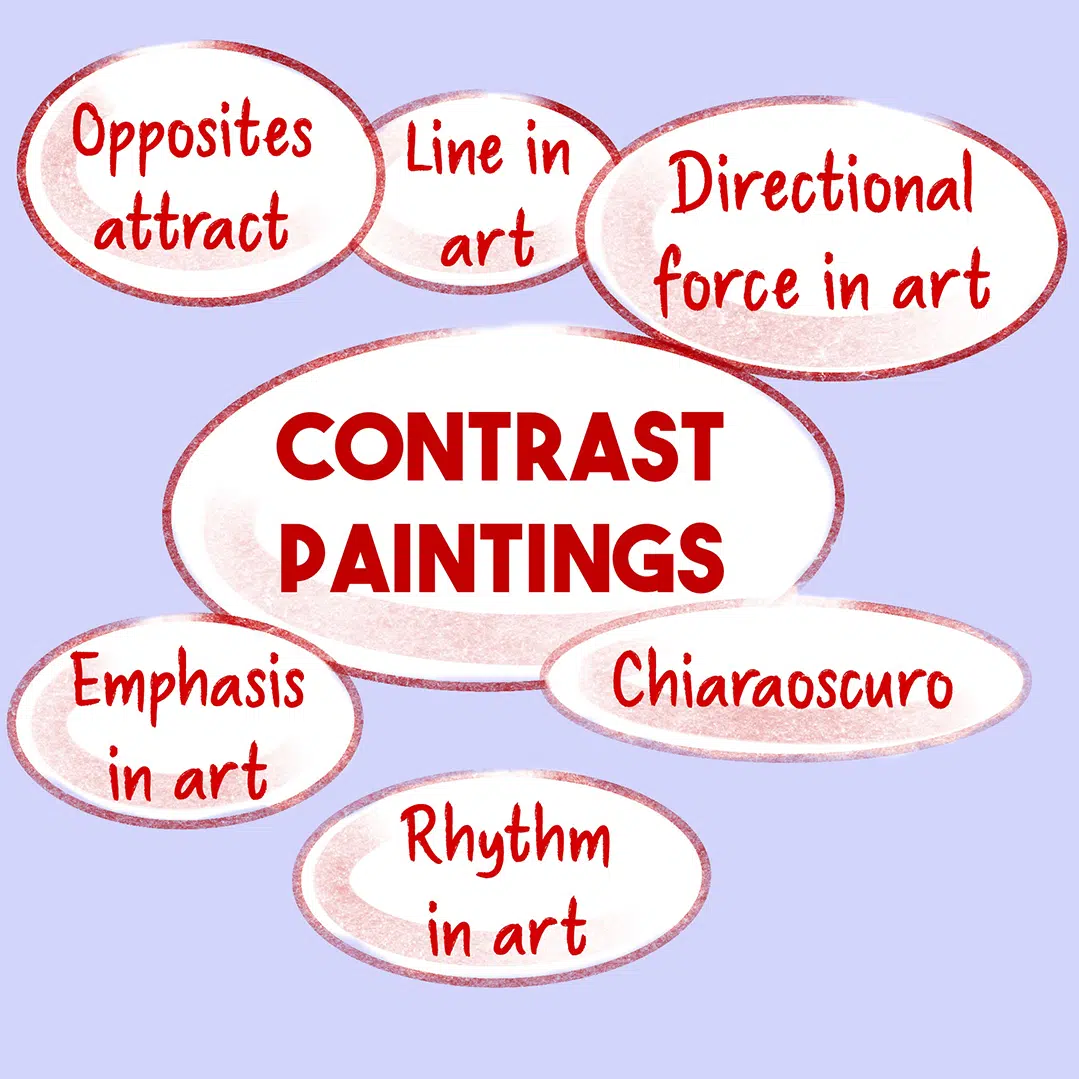
My query will be “contrast paintings.” Here, I see a list of suggested words with a decent Monthly volume. I will select the ones that fit my style:
- chiaroscuro (8915 monthly searches)
- opposites attract (949)
- emphasis in art (298)
- rhythm in art (483)
- line in art (207)
- directional force in art (64)
Those are just suggestions. But gives me an area of interest and can suggest words I haven’t thought about. I keep those words as leads for my website, combined with the techniques I use (such as acrylic, oil, watercolor, etc).
From that point, I need to:
- Precisely evaluate the difficulty to rank on the 1st page
- Get more specific keywords
3. Find the title of your post
I register on Ubersuggest to check the keyword ideas (So far, it is the best way to get some data for free).
Ubersuggest keyword suggestion tells you the estimated volume for a specific keyword. Don’t forget, those are only estimations.
So I write “Contrast paintings”:

I can see their 1st result:
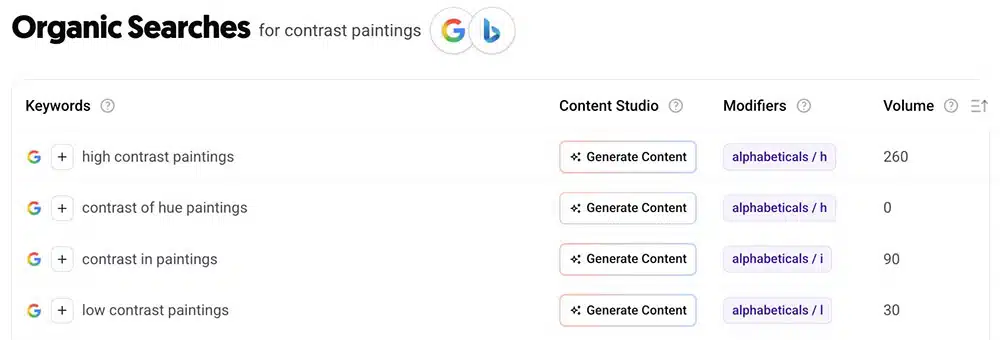
For more details, I click on keyword ideas:
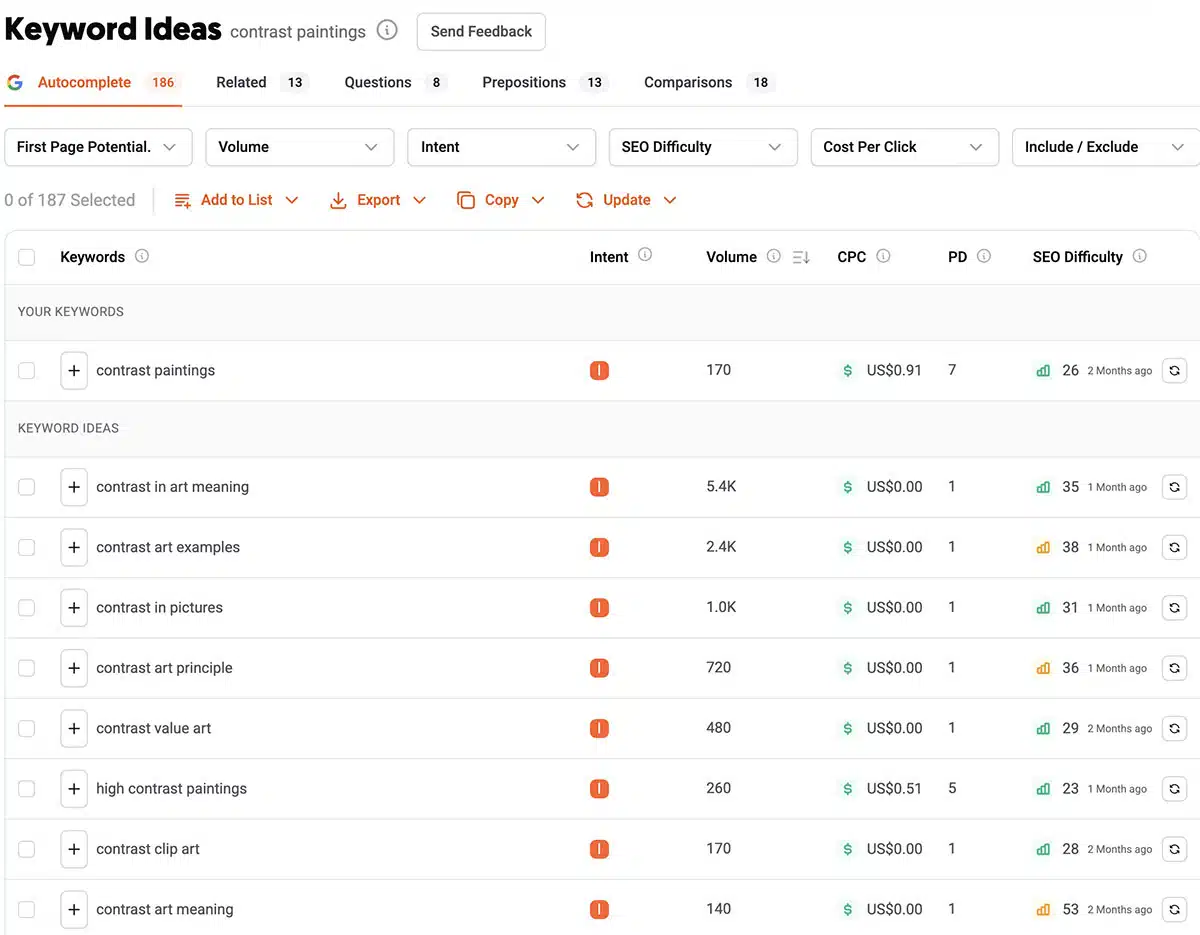
- VOLUME: This is the number of queries per month.
- CPC: Cost Per Click. Literally, how much investment is in ads for this keyword? A keyword with a CPC of 0 usually means it is searched for information, and people don’t search for it with buying in mind.
- PD and SEO Difficulty: Paid difficulty and SEO Difficulty (from 1 to 100). Those two difficulties are better for you when closer to 0. If your website is new, it is good not to target high-difficulty keywords.
We won’t choose “contrast paintings” to start with because their difficulty is too high.
The game is to find keywords with some Volume and with the lowest possible difficulty.
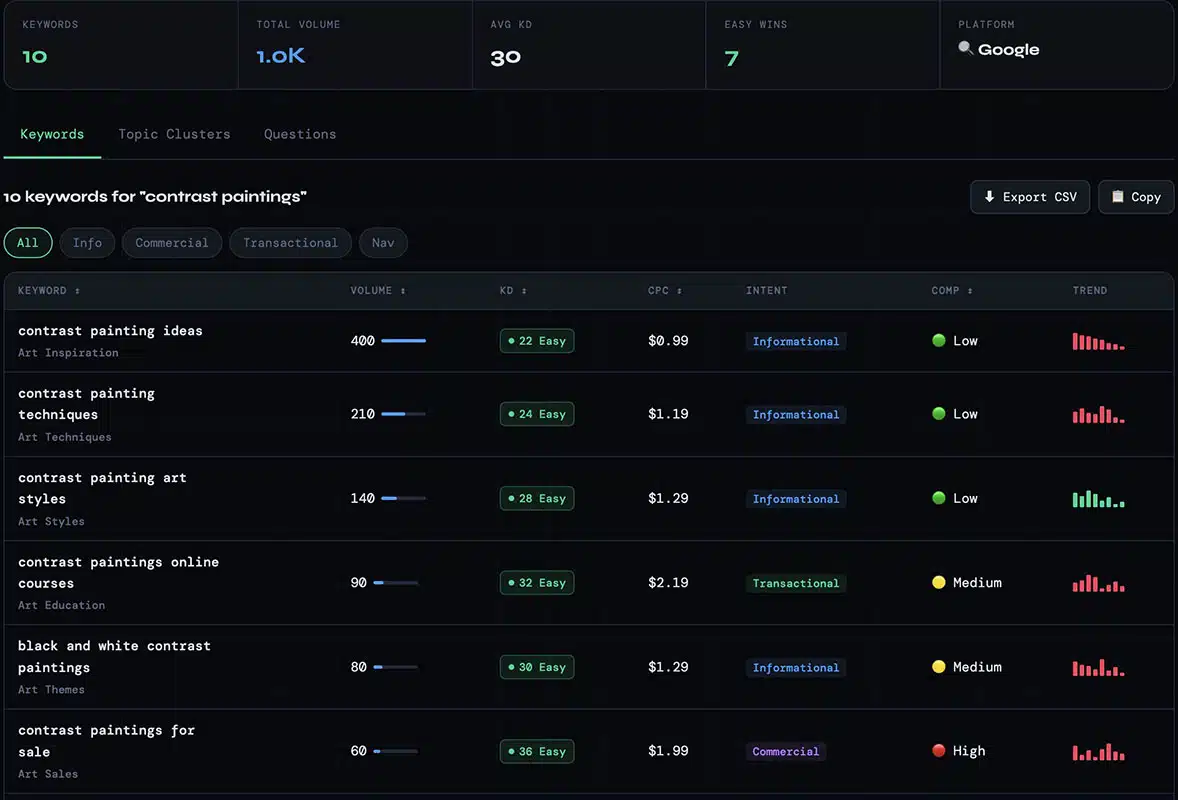
Ubersuggest is a Freemium. Good to start with for limited results. A better tool is keywordfinder.dev. Totally free and more accurate. Here are some results for contrast paintings (Click to enlarge the view):
Small SEO tip:
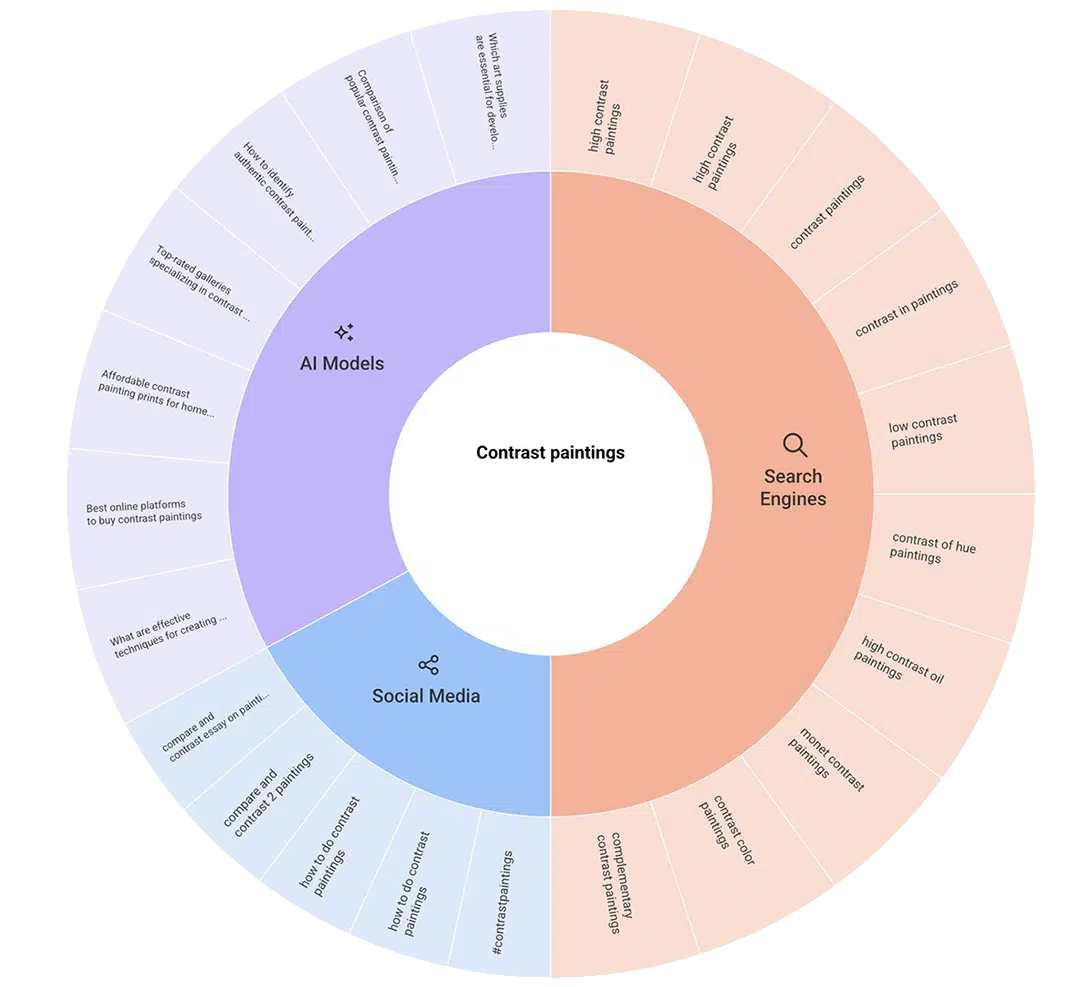
14.1% of search queries are question keywords (source: backlinko.com/google-keyword-study), such as ‘what is’, ‘how to’, and ‘why’. A great way to find them are Answerthepublic and AlsoAsked.
4. Use your Keywords in your content
Once you find them, use them on your URLs, images (Alt text), and Headings (titles). This part is explained in the SEO tips.
5. Create the content on your artist website
At this step is where the trap lies. You, as artists, will be the targeted audience by website platforms (Wix, Artwork Archive, and Squarespace). It’s not that they are bad, but when it comes to Social Media platforms, you have to follow their rules: the simplicity of use they provide also serves to control your content.
We really advise content management systems (CMS). The best for most people today is WordPress.
6. Link your content
This is where artists are the best and, possibly, the worst.
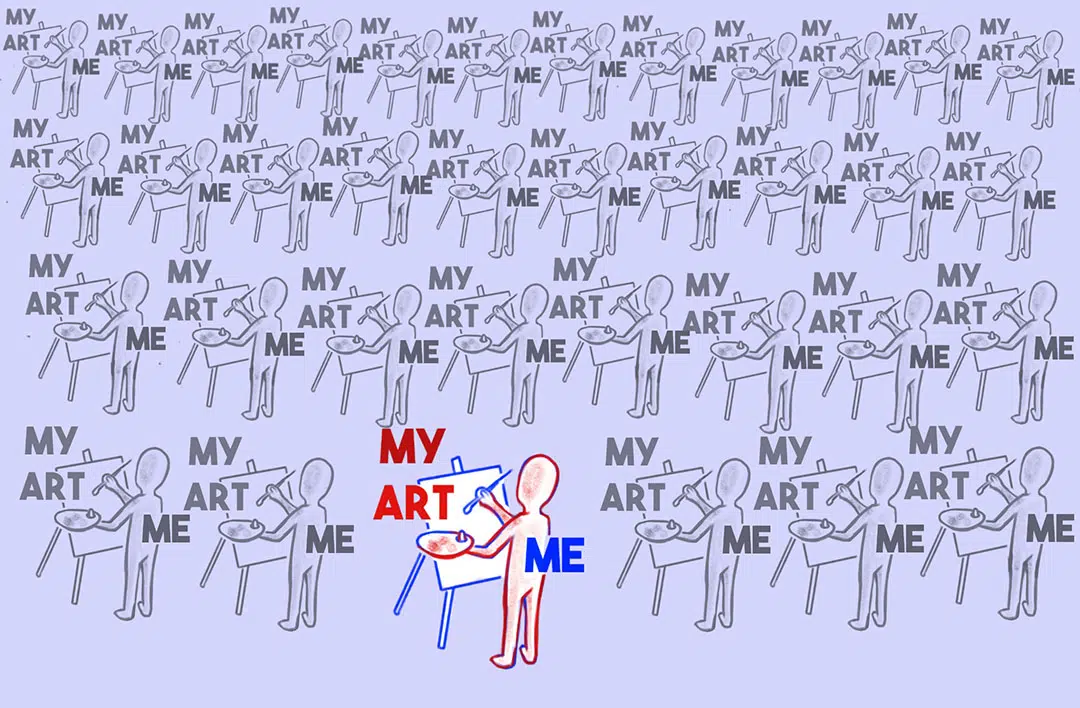
The worst: Most artists are just about themselves (me, me, me) and their work. But if you want to exist on the Web, you need to link with others, speak about others, and others need to do the same.
The best: While most people (yet less and less) need to find a way to create images, artists are image creators. And while most businesses have difficulty selling because they find them too commercial, artists have this innocent image of being genuine.
Share "Find Art Keywords" on:
Articles about SEO:
- Art keywords
- Artist websites backlinks
- Content for artist websites
- Art website name ideas
- SEO tips for artists