Hey, this is Mo,
This is not my first Estampa; I started coming around 8 years ago, and I will try to visit and update this article every following year. This is the 34th edition; yes, it's an old fair; it has been around forever. Held from the 24th to the 27th of September, Estampa features more than 80 galleries. The venue is at IFEMA Convention Center.
Estampa art fair
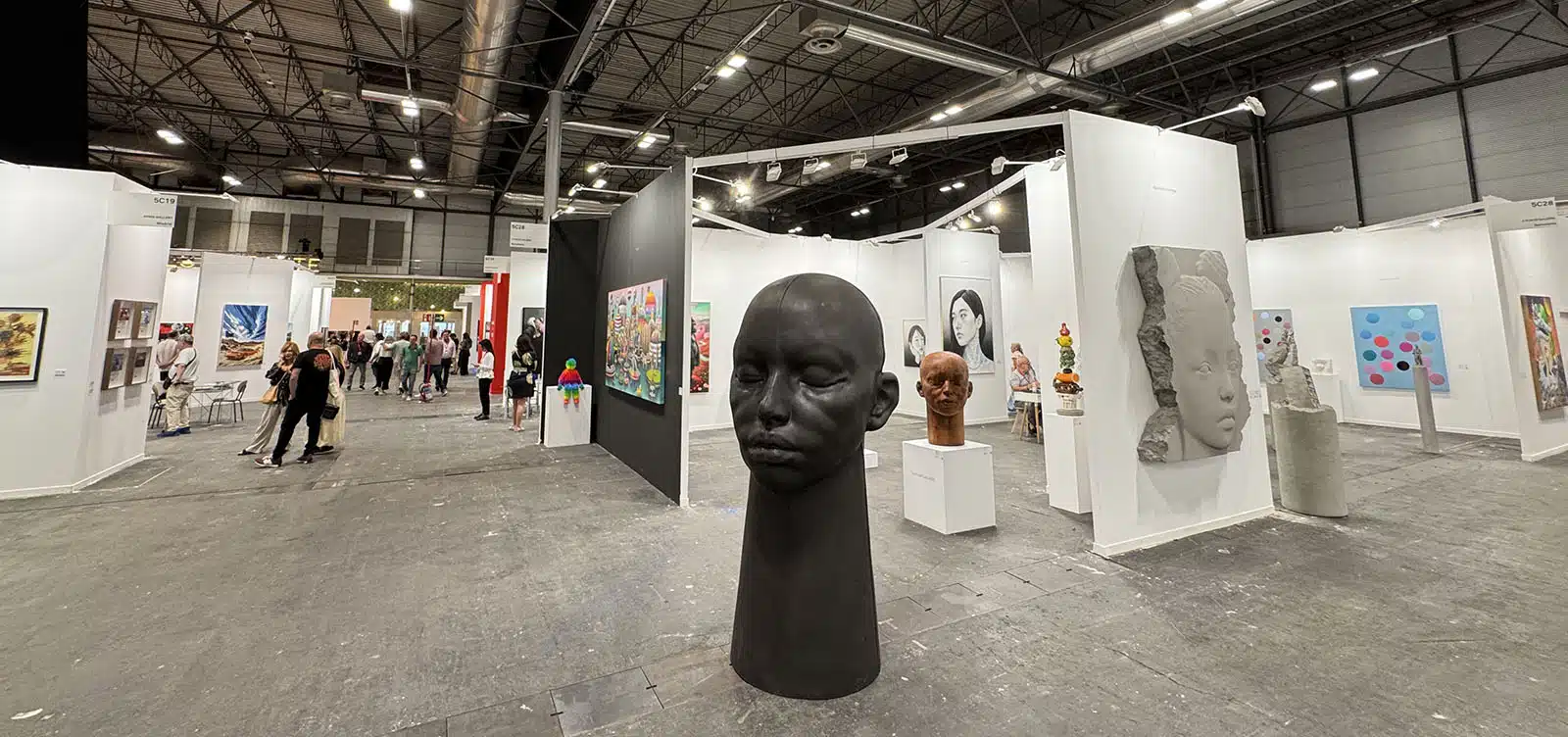
Estampa's art fair scale
Estampa is the biggest off-season art fair in Madrid; compared with ARCO, it is much smaller: like her little sister, about one-third of its size. It is a medium-sized fair, but I think it's a good size; you can walk through a large part of the Spanish art-gallery ecosystem in just one art fair without getting lost.
Opening Event
On that day, it was Estampa's official opening; they were holding an opening ceremony inside; there were so many people that I could barely see any of the art at all; I could only see glasses and drinks.
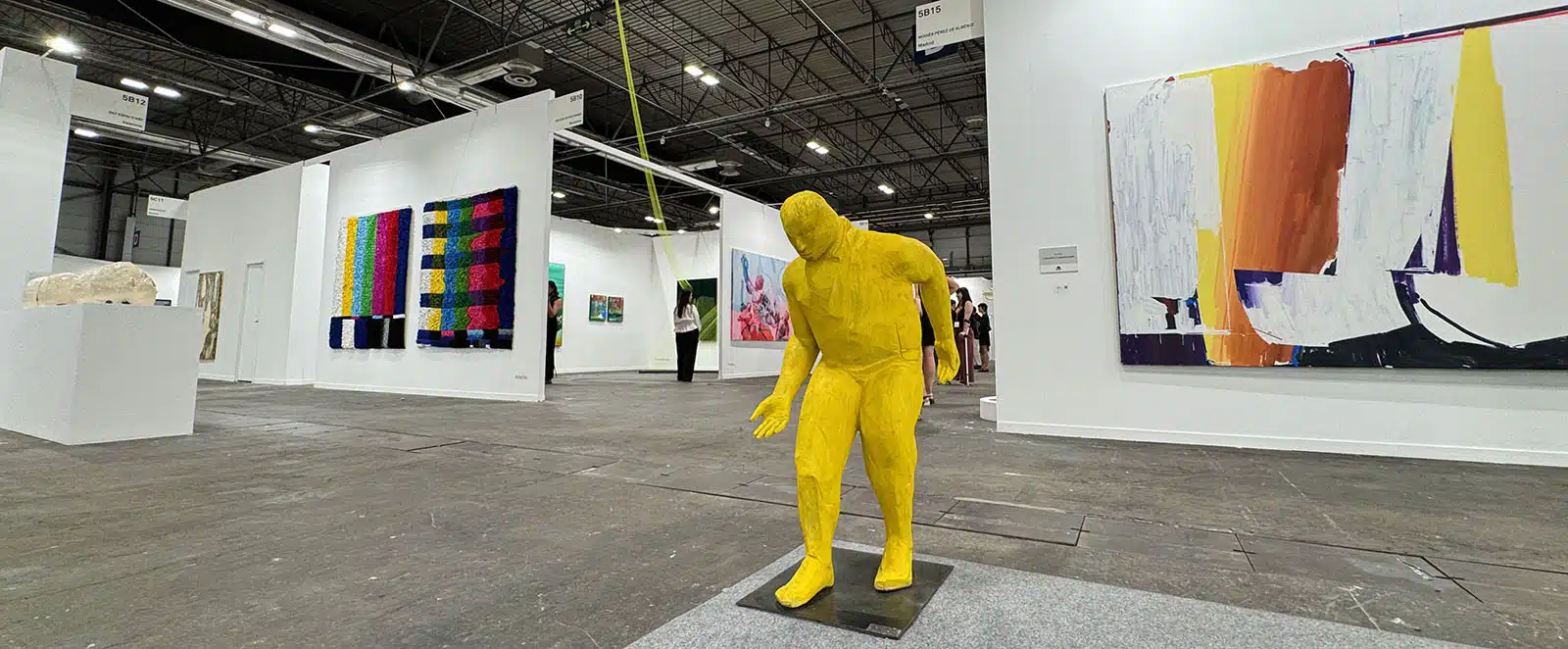
Zones and Sections
You can visit the fair over two days:
- On the first, zones A and B, mainly for older galleries and more established artists;
- On the second, zones C and D, for younger galleries and emerging artists.
(Zone B has a slight tendency towards younger and more playful visual languages, although the boundaries are a little blurry rather than absolute.)
Contemporary classic section
There's a special section for older galleries, "Clásicos Contemporáneos"; the focus is on artists who already have established a place in art history; it is a very different logic of collecting from the emerging section of the fair.
Future rehearsal section
"Ensayo Futuro" is a special curatorial section dedicated to newer galleries and project spaces created in Spain in recent years; it would be the equivalent of ARCO's Opening section, but with less international representation.
Art editions section
The final area is mainly art editions; one project I would like to highlight is the PAC (Plataforma de Arte Contemporáneo). They represented a solo project called "Tired of looking" (Saturados de mirar), which deals with the idea that we are constantly surrounded by images; we look so hard that we're no longer looking at anything.
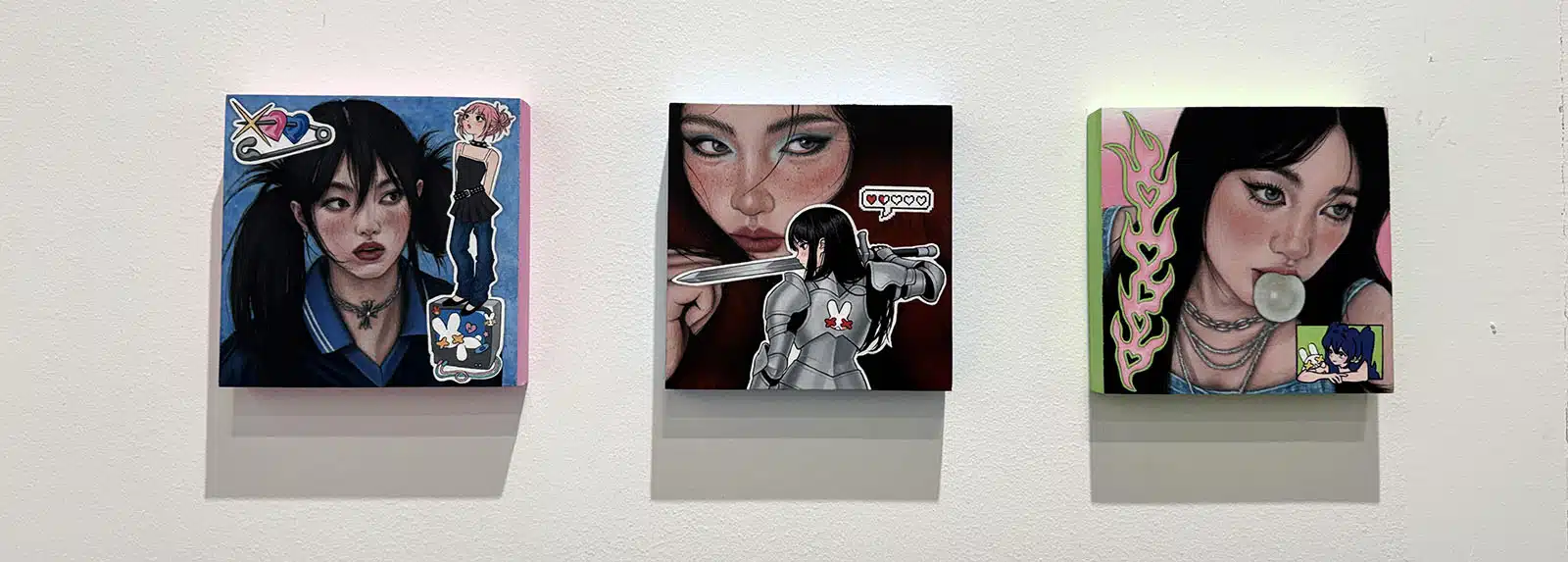
Mandy Shadows at PAC
Curatorial section
Each year, Estampa aims to present a curatorial theme that highlights an artist, a social issue, or a geographic area. This year, the central project of Estampa 2026, "Esther Ferrer, the special curatorial area," was an entire hall dedicated to her works from private collections. This is a retrospective, and nothing is for sale in that special curatorial Section.
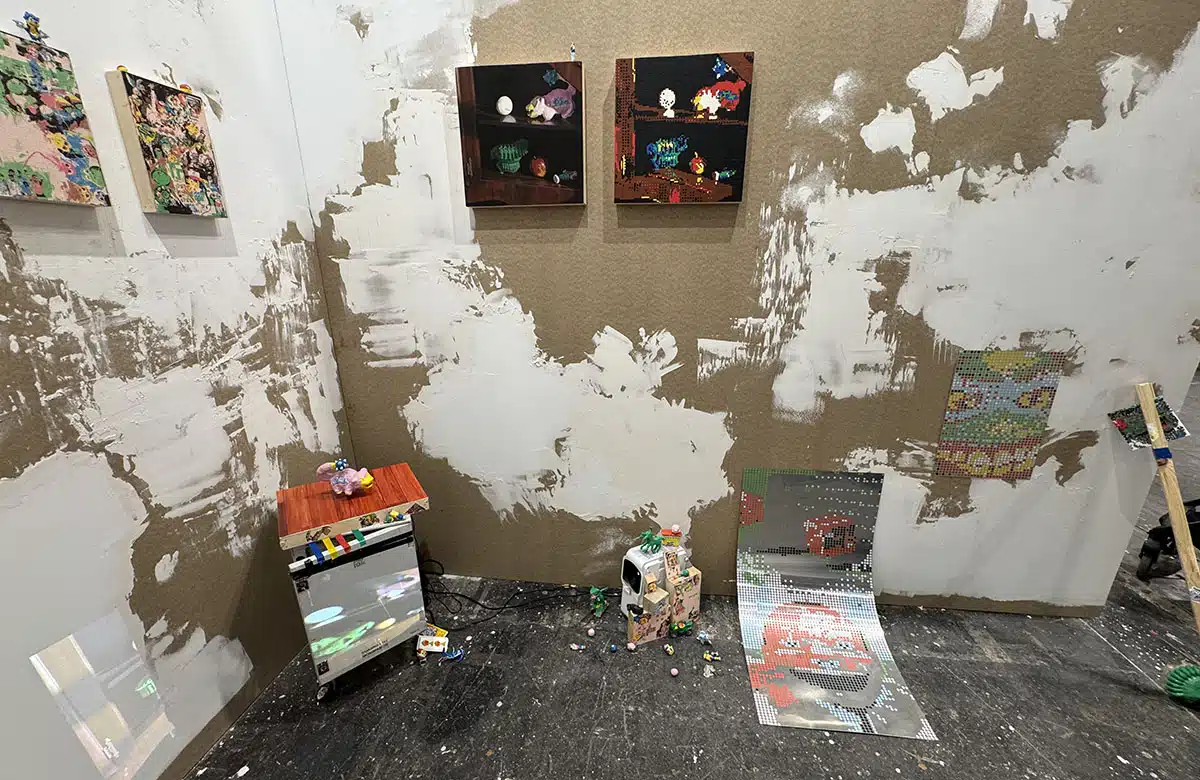
Estampa's aspects
The following are subjective things I noticed during my visit:
Fair's History with Prints
Estampa originally developed from a much stronger relationship with art, prints, editions, and works on paper; even though it has become a more generic contemporary art fair today, you can still occasionally feel traces of that history in some of the works.
Digital Labels
What caught my attention first was not the artworks but the labels; they were using small electronic display tags. I've seen them in supermarkets before, but never at an art fair; probably more eco-friendly because you can reuse them (Am I being ironic?).
Visual navigation landmarks
After a few hours, all these white booths and a lot of colored works began to merge in your head; I often navigate by things like landmarks—an accent wall, a big piece, a large piece of textile art hanging from the ceiling, a yellow entrance that held the opening, a blue wall, a gigantic head placed in the corner of a booth.
Plexiglass Works
I think that every 5th, I saw at least one piece made of plexiglass, so it's definitely the trend here.